
The Rumbling Noise From Your Water Heater and Why It Matters
That low rumble coming from your water heater is not normal, and it is not something the tank will work out on its own. Most homeowners first notice it in the evening, right after a round of showers or a full dishwasher cycle, when the burner or the heating element kicks on and the tank starts to grumble like a distant thunderstorm. The sound has a specific cause, and that cause has a specific price attached to it. Sediment has settled across the bottom of your tank, water is trapped underneath it, and steam is forcing its way up through the layer. Every rumble you hear is heat that went into boiling trapped water instead of heating the water you actually use. Left alone, that sediment layer keeps thickening, your recovery time keeps stretching, and the steel at the bottom of the tank keeps cooking. The good news is that the fix is usually simple and inexpensive when you catch it early. The bad news is that homeowners tend to ignore the noise for two or three years, and by then the repair conversation has turned into a replacement conversation.
What Causes the Rumbling Noise From Your Water Heater
The rumbling noise from your water heater comes from mineral sediment sitting at the bottom of the tank. Every gallon of water that enters your home carries dissolved calcium and magnesium, and heat drives those minerals out of solution. They fall to the floor of the tank and pack into a crusty layer of scale. Water works its way underneath and into that layer, then gets superheated past the boiling point because the sediment insulates it from the rest of the tank. Steam bubbles form, fight their way up through the crust, and collapse in the cooler water above. That percolation is what you are hearing. The louder the rumble, the thicker the layer, as a general rule. Popping, knocking, and a sound like gravel rolling around in a bucket all point back to the same root problem.
Sediment Buildup Is the Main Cause of a Rumbling Water Heater
Sediment starts collecting the day a new water heater is installed, and it never stops. Tiny amounts of calcium carbonate and magnesium precipitate out of the water each time the burner fires, and gravity does the rest. In the first year or two the layer is thin enough that nothing changes; the tank heats normally and stays quiet. Somewhere around year three or four the layer gets thick enough to act as an insulating blanket between the heat source and the water column. That is the point where the rumbling water heater symptom shows up for most families. Once the crust hardens it also traps water in small pockets, which is exactly what produces the steam and the noise. Flushing the tank on a yearly schedule removes the loose sediment before it has a chance to bake into a solid sheet.
The composition of the layer matters as much as its thickness. Loose, sandy sediment moves easily and will usually wash out through the drain valve during a standard flush. Hardened scale bonds to the glass lining and to the steel, and it can take a descaling solution or a full drain and refill cycle to break it loose. Homes that have gone five or more years without any water heater maintenance often have both types stacked on top of each other. A plumber can usually tell the difference by how the water runs during a flush and by how long the tank takes to drain. Cloudy discharge full of white flakes points to active scaling. Water that runs clear while the tank still rumbles usually means the crust has cemented itself in place. That second situation calls for a closer look before anyone starts draining valves and hoping for the best.
Sediment also does damage in places you cannot hear. It settles into the drain valve and blocks it, so the one tool you have for maintenance stops working. It buries the lower portion of the anode rod, which is the sacrificial metal component that protects the tank from corrosion. It can partially block the dip tube outlet and change how cold water circulates inside the tank. In gas units the layer sits directly over the flame path, so combustion heat has nowhere to go except into the steel. All of this happens quietly, well before the first rumble. By the time you hear the noise, the buildup has already been developing for a long stretch. That is why a rumbling water heater is best treated as an inspection trigger rather than a background annoyance.
How Hard Water Creates a Rumbling Water Heater in Pittsburgh Homes
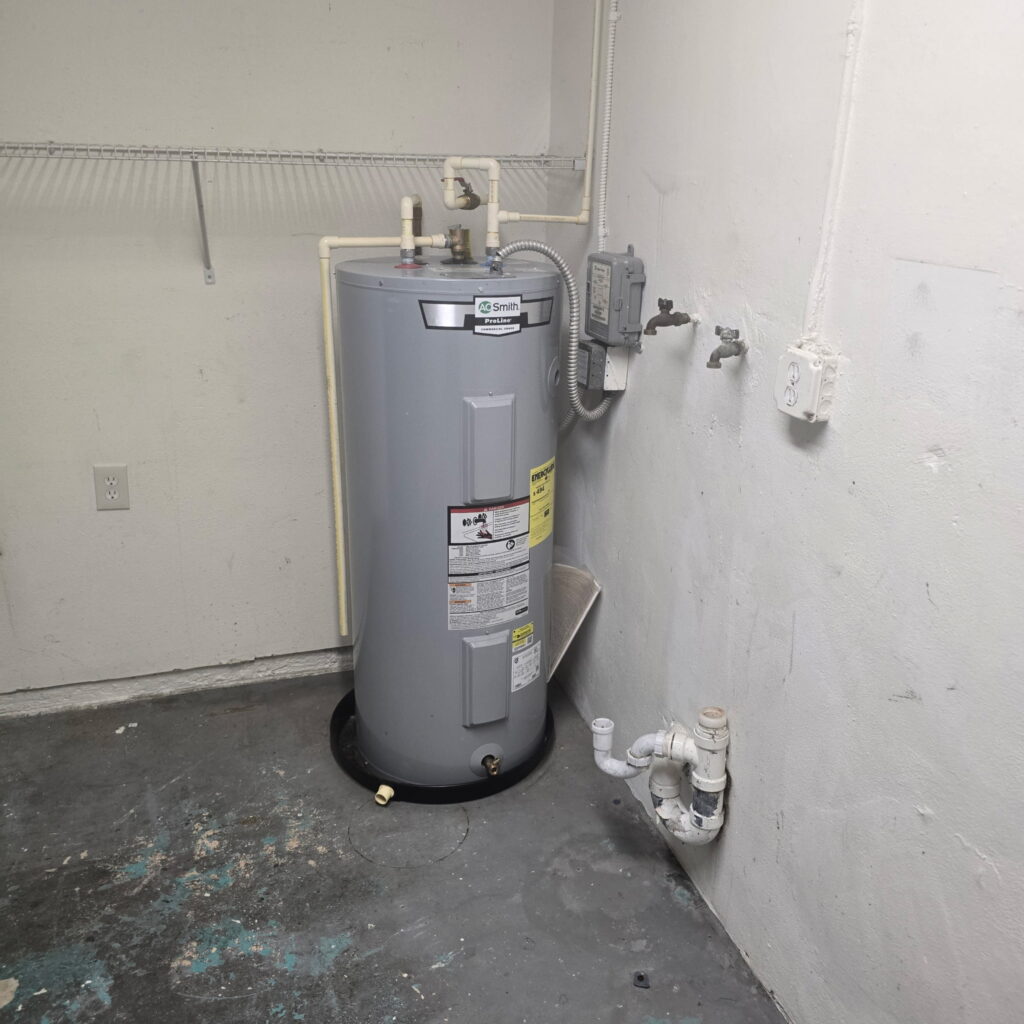
Water hardness is measured in grains per gallon, and the Pittsburgh region sits in the moderately hard range for most municipal supplies. That is not a crisis, but it is more than enough mineral content to build a serious sediment layer over the life of a tank. Homes on private wells across Allegheny and Westmoreland County frequently test much harder than city water. Every extra grain per gallon means more calcium hitting the bottom of your tank every single day. Households with four or five people move far more water through the heater than a single occupant does, so the buildup compounds faster. A rumbling water heater in a busy family home at year four is completely ordinary. The same noise in a quiet household usually means the water itself is on the harder end.
Hard water does not only affect the water heater. You see it as white crust on faucet aerators, spots on glassware that will not wipe off, soap that refuses to lather, and stiff laundry. Those signs around the house are a reliable preview of what the inside of your tank looks like. If your showerhead needs descaling twice a year, your water heater is collecting the same minerals at a much higher rate, because heat accelerates the process dramatically. Some homeowners solve the root cause with a whole house softener or a treatment system, which protects the water heater along with every fixture and appliance in the home. Others handle it with disciplined annual flushing and accept the maintenance schedule. Both approaches work. Doing neither is what leads to a tank failure years ahead of schedule.
Seasonal patterns play a small role as well. Incoming water temperature drops during the colder months, so the burner runs longer and works harder to reach the setpoint, which speeds up mineral precipitation. Summer brings the opposite effect on run time, but it also brings heavier hot water use in many homes with kids out of school, houseguests, and more laundry. Higher volume through the tank means more total mineral content delivered to the bottom of it. Water utilities also perform hydrant flushing and main work that can stir sediment into the supply lines. Any of that debris ends up settled in your tank alongside the scale. A summer flush ahead of the heating season is good timing for most Pittsburgh homes. Need help staying ahead of the buildup? Click here for our water heater inspection service.
Gas and Electric Differences Behind a Rumbling Water Heater Noise
Gas water heaters produce the loudest and most dramatic rumbling, and the reason is structural. The burner sits underneath the tank and fires directly against the steel bottom, so the sediment layer is caught between the flame and the water. Heat has to pass through the crust to reach the water column, and the trapped moisture inside the crust flashes to steam almost instantly. That creates the classic percolating boom that homeowners describe as thunder in the basement. It also means the steel bottom is running far hotter than the manufacturer designed it to run. Overheated steel loses temper, the glass lining develops cracks, and corrosion gets a foothold. A gas unit that rumbles loudly deserves attention within weeks, not seasons.
Electric water heaters make a different set of sounds because the heat comes from two elements suspended inside the tank rather than a flame underneath. The lower element usually sits close to the sediment line, so scale coats it directly. Once it is encased, the element cannot transfer heat efficiently into the water, and it overheats inside its own shell. That produces sizzling, hissing, and a crackling sound more often than a deep rumble. Elements that scale over will burn out, sometimes repeatedly, and homeowners often replace the same element two or three times without ever addressing the sediment underneath. Long recovery times and lukewarm water at the tap are the companion symptoms. Cleaning the tank solves the actual problem instead of the visible one.
Tankless water heaters do not rumble, because there is no reservoir for sediment to settle in. They are not immune to hard water, though. Scale forms inside the heat exchanger where water passes through narrow channels at high temperature, and that restricts flow and drives up firing rates. Tankless units announce their scaling with error codes, fluctuating outlet temperature, and reduced flow rather than with noise. The maintenance answer is a descaling flush with a circulating pump, typically once a year in this region. Homeowners who moved from a tank to a tankless unit sometimes assume maintenance ended with the old heater. It did not; it simply changed shape. Skipping descaling on a tankless unit voids most manufacturer warranties.
Why the Rumbling Noise From Your Water Heater Matters for Cost and Safety
A rumbling water heater is a spending problem before it is a plumbing problem. The insulating sediment layer forces the burner or the elements to run longer to hit the same temperature, and every extra minute of run time shows up on your utility bill. Recovery time stretches out, so the last shower of the morning turns cold when it never used to. The tank itself takes structural abuse from the overheating, which pulls years off its service life. Pressure relief valves get more work than they should as steam pockets form and collapse. In severe cases the popping and knocking gets loud enough to be heard on the floor above. None of those outcomes reverse themselves. They compound quietly, month after month, until the tank finally gives up on a schedule you did not choose.
A Rumbling Water Heater Raises Your Energy Bills Every Month
Efficiency loss from sediment is real and measurable. A layer of scale acts as thermal insulation between the heat source and the water, and the thicker it grows, the more energy gets wasted overcoming it. Utility and efficiency studies have long placed the penalty from significant sediment buildup in the range of several percentage points up to a fifth of water heating energy in bad cases. Water heating is typically the second largest energy expense in an American home behind space conditioning. A percentage loss on the second largest line item adds up to real dollars across a year. The rumble is the audible signal that you are already paying that penalty. Most homeowners are surprised how much a single flush improves burner cycle times.
Recovery rate suffers alongside efficiency. A tank rated to reheat a full load in roughly an hour may take considerably longer once the bottom is crusted over, because heat is not reaching the water at the designed rate. Families notice this first as running out of hot water during back to back showers, then as a dishwasher that never quite gets hot enough for the sanitize cycle. The natural reaction is to turn the thermostat up, which is the worst possible response. Higher setpoints accelerate mineral precipitation, so the sediment problem gets worse and the scald risk at the tap goes up. Most manufacturers and safety organizations point to roughly 120 degrees as the right balance of comfort, efficiency, and safety. Turning the dial up masks a symptom while feeding the cause.
The financial math on maintenance is not close. An annual flush costs a small fraction of what a replacement tank and installation costs, and it takes a fraction of the time. A water heater that receives yearly attention commonly reaches the upper end of its expected service life, which runs roughly eight to twelve years for a standard tank unit. A neglected tank in hard water frequently fails around year six or seven. That difference represents thousands of dollars over the time you own your home. Add in the higher monthly bills during the neglected years, and the gap widens further. Hearing a rumble and scheduling service is one of the highest return decisions a homeowner can make. Ignoring it is one of the most expensive.
A Rumbling Water Heater Shortens the Life of the Tank
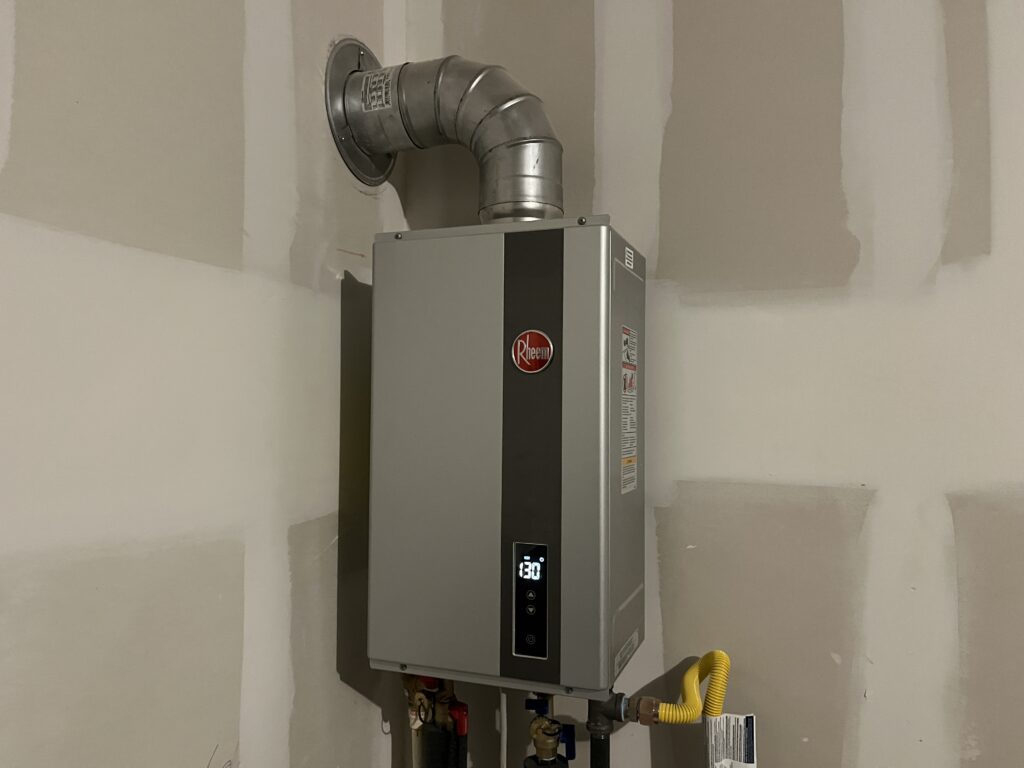
The inside of a steel water heater tank is coated with a thin layer of glass lining, and that lining is the only thing standing between the water and bare steel. Glass and steel expand at different rates when heated. Extreme localized heat under a sediment layer causes the steel to flex more than the lining can tolerate, and hairline cracks form. Water reaches the steel through those cracks and corrosion begins in spots you cannot see or inspect. The anode rod is designed to attract that corrosion sacrificially, but a rod buried in sediment cannot protect the area it is buried in. Corrosion progresses in the exact place where the damage is worst. Eventually the bottom of the tank perforates and the unit leaks.
Tank failures rarely announce themselves politely. A perforated water heater can release its full capacity across a finished basement floor in a matter of minutes, and it keeps releasing water because the supply line is still feeding it. Fifty gallons on the floor damages flooring, drywall, stored belongings, and anything sitting nearby. Homeowners who have gone through it will tell you the water damage cost more than the heater did. Cleanup, drying equipment, and repairs stack up fast. A rumbling tank that is already eight or nine years old is telling you something worth acting on now. Prevention here is far cheaper than restoration.
Warranty coverage is another reason to take the noise seriously. Nearly every manufacturer warranty for a tank water heater includes a maintenance requirement, and most explicitly call for periodic flushing. A tank that fails from documented sediment neglect may not be covered, which leaves the homeowner paying full price for a replacement that might otherwise have been partially covered. Service records from a licensed plumber provide the documentation those claims require. Beyond warranty terms, regular service gives a technician the chance to catch a failing anode rod, a corroded fitting, or a pressure relief valve that is no longer functioning correctly. Those catches often prevent the emergency entirely. Hearing a rumble and getting a professional set of eyes on the unit is simple insurance. Click here for our water heater repair service if your tank is already showing signs of trouble.
Other Water Heater Noises to Compare Against a Rumbling Water Heater
Not every water heater sound points to sediment, and telling them apart saves time and money. A sharp banging that happens right when a faucet or washing machine valve shuts off is water hammer, which is a pressure wave in the supply piping rather than a tank issue. Ticking or light clicking that fades a minute or two after the burner shuts down is normal thermal expansion in the piping and the heat traps. A high pitched whistle or screech usually traces back to a partially closed valve or a restriction somewhere in the line. A steady sizzling under a gas unit can mean condensation dripping onto the burner, which is common on cold mornings but worth checking if it persists. Each of these has a different cause and a different fix. A rumble is the one that consistently points back to the tank bottom.
Location and timing tell you a great deal. Sounds that occur only while the heater is actively firing point to the tank. Sounds that occur when fixtures open or close point to the piping and the pressure in the system. Noises that travel through the walls and change with water use often come from pipes that are not properly secured to framing. Homeowners can narrow the field considerably just by paying attention to what was happening in the house when the noise occurred. Note the time of day, the fixtures in use, and how long the sound lasted. That information helps a technician diagnose faster and keeps the service call efficient.
Some sounds warrant immediate action rather than observation. Popping combined with visible rust colored water at the tap suggests corrosion has already started inside the tank. Rumbling paired with water pooling near the base of the unit means the tank may already be compromised. Any hissing or bubbling from the pressure relief valve indicates the system is discharging, which points to excessive temperature or pressure that needs attention right away. A gas smell near a water heater is an emergency and calls for evacuating the area and contacting the gas utility before anything else. These situations do not improve with time. Knowing which category your noise falls into is the difference between a scheduled appointment and a middle of the night crisis.
Why You Need a Professional Water Heater Inspection for a Rumbling Water Heater
A rumbling water heater is one of the few plumbing problems that gives you clear advance warning, and that warning is worth using. A professional inspection identifies how much sediment has accumulated, what condition the anode rod is in, and how much service life the tank realistically has left. It also catches the related issues that homeowners rarely think to look for, including pressure relief valve function, thermostat calibration, venting on gas units, and connection corrosion. Flushing sounds simple until a drain valve clogs with hardened scale or refuses to reseal afterward, which turns a maintenance task into an emergency. Older tanks in particular can develop leaks at the drain valve once sediment gets disturbed. Having a licensed plumber handle the work means the right tools are on hand when something does not go according to plan.
What a Professional Water Heater Flush and Inspection Includes
A proper water heater flush starts with safety, not with the hose. Gas units get the control set to the pilot or vacation position, and electric units get power cut at the breaker so the elements cannot fire while the tank is empty. The cold water supply is closed, a hose is connected to the drain valve, and a hot fixture upstairs is opened to break the vacuum. Water and sediment then drain out under gravity or with assistance, depending on how packed the tank is. Cold water is cycled back in to stir up the remaining debris and carry it out. The tank is refilled completely before the heat source is restored, which prevents dry firing damage on electric elements.
The inspection portion is where most of the value lives. The anode rod is checked for remaining material, since a rod consumed down to the core wire leaves the tank unprotected against corrosion. The temperature and pressure relief valve is tested to confirm it opens and reseats correctly. Thermostat settings are verified, connections are checked for corrosion and small leaks, and gas units get a look at the burner assembly, the flame pattern, and the venting. Any signs of scorching, backdrafting, or rust at the base get documented. Small findings caught during this walkthrough often prevent large expenses later.
Documentation matters more than people expect. A written record of service dates supports warranty claims and gives you a factual basis for deciding when replacement makes sense. It also creates a baseline; a technician who flushed your tank last year knows immediately if this year produced substantially more sediment. That trend line is genuinely useful information about your water and your equipment. Homeowners selling a property benefit as well, since maintained mechanical systems inspect better and answer buyer questions cleanly. Regular service turns your water heater from an unknown into something predictable.
When a Rumbling Water Heater Means Repair or Replacement
Age is the first factor in the repair versus replace decision. A rumbling tank in year two or three almost always responds well to a flush and returns to quiet operation. A rumbling tank in year ten is a different conversation, because the sediment has been doing damage for a long time and the remaining service life is short regardless of what the flush accomplishes. Somewhere in the middle sits a judgment call that depends on the tank’s condition, the anode rod, and any signs of corrosion. Spending money on a unit with a year or two left rarely makes sense. A plumber who inspects the unit can give you a straight answer rather than a guess.
Certain findings move the decision firmly toward replacement. Any active leak from the tank body itself is terminal, because there is no repair for a perforated tank. Rust colored hot water that persists after flushing indicates internal corrosion is advanced. A drain valve that will not pass water at all suggests sediment has hardened to the point that removal is impractical. Repeated element failures on an electric unit within a short window tell the same story. In those cases, putting the repair money toward a new unit produces a far better outcome.
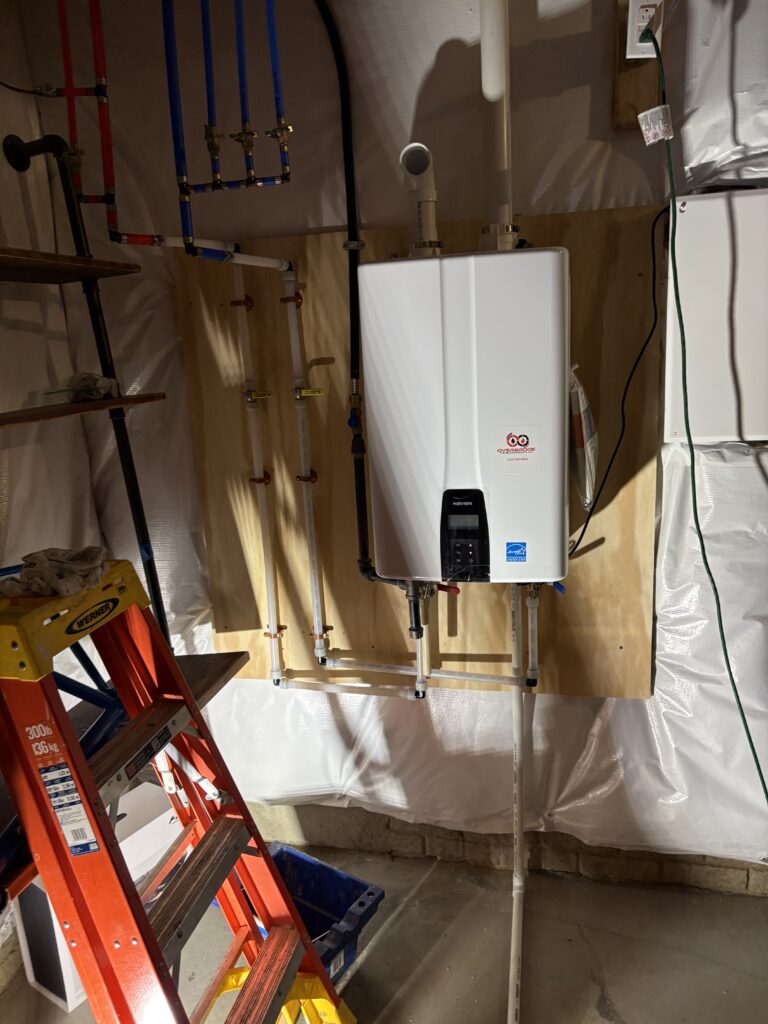
Replacement also opens options worth considering. Higher efficiency tank models cut operating costs meaningfully compared to units from a decade ago. Tankless water heaters eliminate standby losses entirely, produce hot water on demand, and typically last longer than tank units when they are descaled on schedule. Correct sizing matters more than most homeowners realize, since an undersized unit runs constantly and an oversized one wastes energy holding water nobody uses. A plumber sizes the unit to actual household demand rather than to the label on the old tank. Ready to talk about a new unit? Click here for our water heater installation service.
Why Choose Overbrook Plumbing for Your Rumbling Water Heater
Overbrook Plumbing is a local Pittsburgh based team, and local matters with water heaters. We work in these neighborhoods every day, we know what the water in this region does to a tank, and we size and service equipment for the homes that are actually here. Our pricing is honest and straightforward, so you know the number before the work starts and it does not change on you afterward. We are licensed and insured in Pennsylvania, and we hold ourselves to a five star standard on every call. That standard is the reason our customers call us back.
We also understand that water heaters fail at inconvenient times. Our emergency plumbing service runs 24 hours a day, seven days a week, because a leaking tank at midnight does not wait for business hours. We offer military and senior discounts as a genuine thank you to the people who have earned them. Tankless water heater installations come with a one year labor warranty, which reflects the confidence we have in the work. Every service call ends with a clear explanation of what we found and what we recommend, in plain language.
If your water heater is rumbling, popping, or knocking, do not wait for it to get louder. Sediment does not clear itself, and the damage it causes is cumulative rather than temporary. A flush and inspection now is a small expense that protects a large one. Our team serves Mount Lebanon, Bethel Park, Baldwin, Upper St. Clair, South Park, Ross Township, and communities across the greater Pittsburgh area. Call Overbrook Plumbing at (412) 736-4654 or email info@calloverbrook.com to schedule your water heater inspection, and we will get your tank running quietly and efficiently again.