
How to Protect Your Outdoor Faucets Before the First Hard Freeze
Most Pittsburgh homeowners think about the furnace first when the forecast turns cold, yet the outdoor faucet on the side of the house is the fixture most likely to cause real damage. A hard freeze happens when the air temperature drops to 28 degrees or lower and holds there for several hours, and that is more than enough to turn the water sitting inside a hose bib into solid ice. The first hard freeze of the season usually arrives in October across the higher elevations of Allegheny County and by early November closer to the rivers, so the window for preparation is shorter than most people expect. The frustrating part is that this kind of damage rarely announces itself while the weather is still cold. A split sillcock stays quiet all winter because the ice inside it acts as a plug, and the homeowner only finds out in April when the handle gets turned to fill a bucket and water starts pouring into the basement instead. Twenty minutes of work in the fall prevents a repair that can climb into the thousands once drywall, insulation, subfloor, and stored belongings get involved. The steps below cover what happens inside a frozen faucet, how to winterize the fixture correctly, and when the job needs a licensed plumber.
What Happens to Outdoor Faucets During a Hard Freeze
Water is unusual among common liquids because it expands as it freezes, gaining roughly nine percent in volume as it changes state. Inside a sealed section of copper or galvanized pipe, that expansion has nowhere to go, and the pressure it creates can exceed 2,000 pounds per square inch. Residential supply piping is typically designed for working pressure somewhere between 40 and 80 psi, so the math works out badly in a hurry. The failure almost never happens at the point where the ice forms, which surprises a lot of people. Ice creates a solid plug, pressure builds in the trapped water between that plug and the closed faucet valve, and the weakest point in that trapped section gives way. On copper pipe, the result is usually a longitudinal split running an inch or two along the pipe body, and on a threaded fitting it shows up as a hairline crack in the brass. Understanding that sequence explains why every winterization step below focuses on removing water rather than simply adding insulation.
Why Outdoor Faucets Burst in a Hard Freeze
An outdoor faucet sits in the worst possible location for cold weather performance, mounted through an exterior wall with the spout fully exposed to wind, precipitation, and radiant heat loss. Wind chill does not lower the temperature of the pipe below the ambient air temperature, but moving air strips away the thin layer of warmth that the building envelope leaks outward, so the pipe reaches the air temperature much faster on a windy night than a calm one. Building science research puts the temperature alert threshold for uninsulated pipes in unheated spaces at around 20 degrees Fahrenheit, though a faucet with a hose still attached can freeze at higher temperatures because the hose holds standing water right up against the fixture. A north facing wall with no afternoon sun freezes hours before a south facing wall on the same house. Older Pittsburgh homes make the problem worse, since many were built with the hose bib supply running through an uninsulated rim joist cavity or a cold crawlspace. Once the water in that run of pipe drops below 32 degrees, ice formation begins at the coldest point and works its way inward toward the heated part of the house.
The pipe itself does not fail the moment ice forms, and that delay is what fools homeowners into thinking they got lucky. Ice forms progressively, narrowing the interior diameter of the pipe until the passage closes completely, and only then does the trapped water on the house side of the plug begin to feel rising pressure. If that trapped water has anywhere to escape, such as an open faucet somewhere in the system or an air cushion in a nearby fixture, the pressure bleeds off harmlessly. When it has nowhere to go, the pipe wall stretches slightly, reaches its yield point, and splits. Copper is ductile enough to bulge a little before it tears, which is why a burst copper line often shows a visible swelling right next to the crack. PEX tubing handles freeze expansion far better than copper because the material can stretch and recover, but the brass or poly fittings crimped onto the ends of PEX do not share that flexibility and frequently crack instead.
The real financial damage happens during the thaw, not the freeze. As long as the ice plug remains solid, it seals the split and nothing escapes, so the house stays dry and the homeowner has no reason to suspect a problem. When temperatures climb back above freezing and the plug melts, that split pipe is now connected to a pressurized municipal water line running at roughly 50 to 70 psi in most of the Pittsburgh area. A half inch supply line with a two inch split can release several hundred gallons per hour into a wall cavity or basement ceiling. Because the failure point sits inside a wall or above a finished ceiling, water travels along framing members and spreads well beyond the original break before anyone notices a stain. Homeowners who catch it early still face drywall replacement, insulation removal, and mold remediation. Need help right now with a pipe that already gave way? Click here for our burst pipe repair service.

How a Frost Free Outdoor Faucet Fails in a Hard Freeze
A frost free sillcock is designed to solve the freezing problem by moving the valve seat away from the exterior wall, and it works well when it is installed and used correctly. Instead of a short brass body with the shutoff mechanism right behind the handle, a frost free unit uses a long stem, typically 8, 10, or 12 inches, that reaches back through the wall into heated interior space. Turning the handle closes the valve at the far interior end of that stem, so the water stops at a point where the surrounding air stays above freezing. The section of pipe between the closed valve and the spout then drains out through the spout by gravity, leaving nothing behind to expand. That gravity drain is the entire basis of the design, and it is also the reason these faucets fail so often in practice.
The single most common cause of a frost free faucet failure is a garden hose left connected through the winter. With a hose threaded onto the spout, the water in the stem cannot drain out, and the hose itself holds a column of standing water pressed directly against the fixture. The stem stays full, freezes solid, and splits somewhere along its length inside the wall. Homeowners in this situation still see no water when they open the faucet in spring, because the split is upstream of the spout, and the water instead sprays into the wall cavity or the basement joist bay. Improper installation causes the same outcome. The fixture must be pitched slightly downward toward the exterior, roughly a quarter inch of fall over the length of the stem, and a unit mounted dead level or tipped upward will retain water no matter how carefully the homeowner disconnects the hose.
Two other components on a frost free faucet deserve attention before cold weather arrives. Most modern sillcocks include an anti siphon vacuum breaker on the spout, a small brass cap that prevents contaminated water from being drawn backward into the drinking water supply. That vacuum breaker holds a small amount of water, it can freeze and crack, and a leaking or dripping vacuum breaker is a common fall complaint. The internal washer at the tip of the stem also wears out over time, and a frost free faucet that drips after the handle is closed is not fully sealing, which means water continues to feed the stem and defeat the drain function entirely. Any outdoor faucet that drips, weeps around the handle, or feels loose in the wall should be repaired before the first hard freeze rather than after it. Have a faucet that will not shut off completely? Click here for our faucet repair service.
Signs Your Outdoor Faucet Was Damaged by a Hard Freeze
The clearest warning sign shows up the first time the faucet gets used after cold weather, and it is worth testing deliberately rather than waiting for the day the garden needs water. Open the handle slowly while someone watches the interior wall or the basement ceiling directly behind the fixture. Water running strongly from the spout with no sound of rushing water inside the wall is a good sign. Weak flow, no flow at all, or a hissing noise from inside the wall while the spout produces little water all point to a break in the stem or supply line. Shut the handle immediately and close the interior shutoff valve if either of those symptoms appears. A quick test on a mild day in early spring costs nothing and catches most freeze damage before it floods anything.
Some freeze damage shows itself during the winter rather than after it. A faucet handle that turns but produces no water on a cold day usually means the line is frozen, and that is a warning worth acting on immediately rather than waiting for a thaw. Leaving the faucet open in that condition does nothing useful, since the ice plug blocks flow anyway, and it creates a hazard once the plug melts and no one is home. The better response is closing the interior shutoff valve serving that faucet, then applying gentle warmth to the accessible interior portion of the pipe with a hair dryer or a space heater kept at a safe distance. Open flame of any kind, including a torch, must never be used on a frozen pipe because it can flash the trapped water to steam and rupture the line violently.
Interior evidence often appears before anyone notices anything outside. Look for water stains or discoloration on the basement ceiling near the exterior wall where the hose bib penetrates, a musty smell in that corner, or rust colored streaking on the joist. Efflorescence, the chalky white mineral deposit that appears on masonry after repeated wetting, is another reliable clue in an older Pittsburgh basement. A water bill that climbs without an explanation deserves attention too, since a slow leak behind a wall can run for weeks. Pinhole leaks and hairline fitting cracks caused by freeze stress do not always produce visible water, and locating them takes acoustic equipment and thermal imaging rather than guesswork. Suspect a hidden leak somewhere in the house? Click here for our leak detection service.
How to Winterize Outdoor Faucets Before the First Hard Freeze
Winterizing an outdoor faucet is a straightforward job that follows a specific order, and skipping a step tends to undo the value of the ones that came before it. The goal in every case is the same: get the water out of the exposed section of pipe and keep new water from refilling it. Insulation alone does not accomplish that, because insulation only slows heat loss and a sustained hard freeze will eventually win. Homeowners in the Pittsburgh area should plan to complete this work in October, before the first overnight low in the twenties shows up in the forecast. The work requires no specialized tools, though a bucket, a flashlight, and a small pair of pliers make it easier. Anyone who cannot locate the interior shutoff valve, or who finds a valve that will not turn, should stop and call a plumber rather than forcing it.
Disconnect Hoses to Protect Outdoor Faucets Before a Hard Freeze
Removing every garden hose from every exterior faucet is the first and most important step, and it is the one skipped most often. Water left inside a coiled hose freezes and expands just like water in a pipe, splitting the hose along its length and destroying the brass ferrule at the coupling. More importantly, a connected hose blocks the drain path that a frost free faucet depends on, holding water inside the stem where it will freeze and break the fixture. Disconnect the hose, drain it completely by stretching it out along a slope or draping it over a fence rail, then coil it loosely and store it in a garage or shed. Storing hoses tightly coiled on cold concrete shortens their life considerably, since the rubber stiffens and cracks at the bend points. This same rule applies to pressure washer hoses, soaker hoses, and any quick connect adapter left threaded onto a spout.
Splitters, timers, and Y valves left on the faucet cause exactly the same problem as a hose, and homeowners frequently overlook them because they are small and permanently mounted in appearance. A brass splitter holds several ounces of water in its body, freezes solid, and cracks the casting, and a plastic one shatters. Battery powered irrigation timers hold water in the diaphragm chamber and are ruined by a single hard freeze. Every one of these accessories needs to come off the spout, get drained, and go into storage until spring. Once the fixture is bare, open the handle fully and let it run for several seconds, then close it and watch the spout. A frost free faucet should drip for ten to twenty seconds as the stem drains and then stop completely, and a spout that keeps dripping past that point signals a worn internal washer that needs replacement.
Irrigation systems and outdoor kitchens need the same treatment on a larger scale. A residential sprinkler system holds water in lateral lines, valve manifolds, and backflow preventers, all of which sit at or near grade where they freeze first. Draining by gravity alone is rarely sufficient because most zones have low points that trap water, so the accepted practice is blowing the lines out with compressed air at a controlled pressure, generally kept below 80 psi for PVC systems and lower for polyethylene. Backflow prevention assemblies should be isolated, drained through their test cocks, and left with the ball valves at a partial angle so any residual water has room to expand. Outdoor sinks, pot fillers, and pool fill lines all need their own shutoff valves closed and their supply runs drained. Homeowners who are unsure where these low points sit are better served by having the system winterized professionally the first year and then repeating the documented process afterward.
Shut Off and Drain the Supply Line to Your Outdoor Faucets Before a Hard Freeze
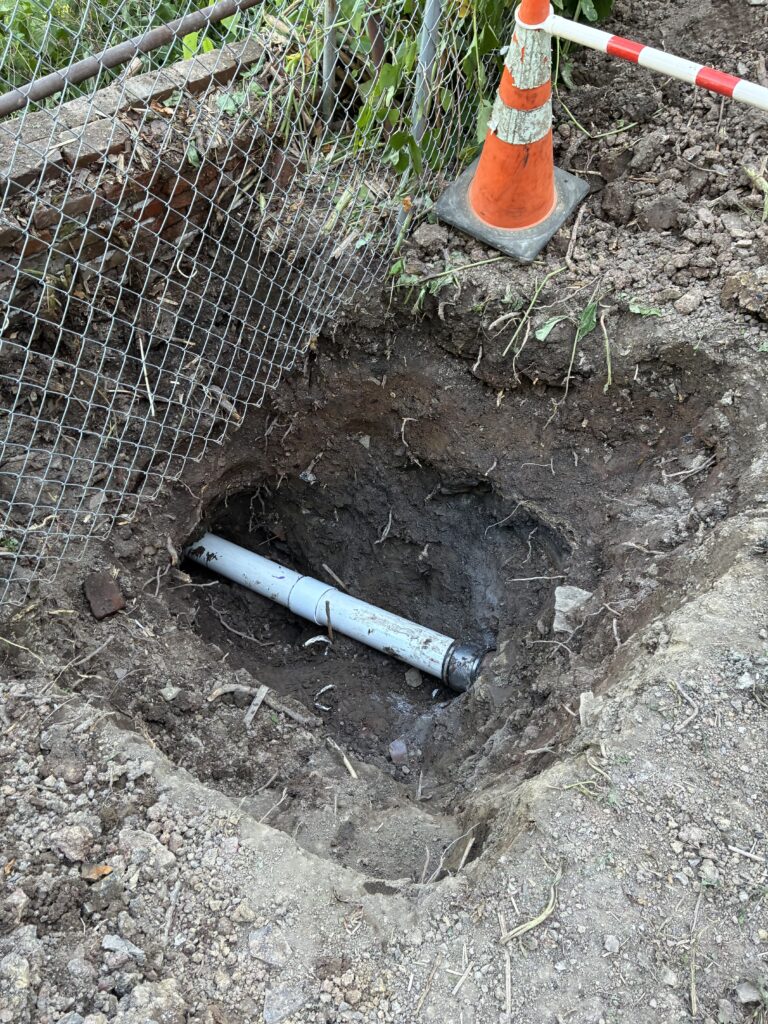
The interior shutoff valve is the piece of hardware that makes real winterization possible, and finding it is the first task. In most Pittsburgh homes, that valve sits on the supply line inside the basement or crawlspace, within a few feet of the point where the pipe passes through the exterior wall to the hose bib. It may be a round handled gate valve on older galvanized or copper piping, or a quarter turn ball valve with a lever handle on newer work. Trace the pipe back from the wall penetration and look for the first valve in that run. Close it fully, then go outside and open the exterior faucet all the way. Water will drain out of the spout for a few seconds and then stop, and leaving that exterior handle in the open position through the winter is correct, because it gives any remaining water room to expand rather than trapping it.
Many of these interior valves include a small bleeder cap, sometimes called a waste or drain cap, on the side of the valve body. That cap exists specifically for this job. With the valve closed and the exterior faucet open, place a small container under the bleeder, unscrew the cap a few turns, and let the water trapped between the valve and the spout drain into the container. Air entering through the open exterior spout allows the line to empty completely rather than holding a vacuum. Once the dripping stops, snug the cap back down finger tight plus a light turn with pliers, and leave the exterior faucet open. This single step removes essentially all of the water from the vulnerable section and is the difference between a fixture that survives a January cold snap and one that splits.
Some homes, particularly older ones, have no dedicated shutoff for the hose bib, which leaves the exterior fixture permanently connected to the pressurized house supply. That configuration is a genuine liability in this climate and worth correcting. A plumber can add a ball valve with an integral bleeder on the interior side of the wall in an afternoon, usually with minimal disruption to finished space. Homes with old gate valves also deserve attention, since a gate valve that has not been operated in a decade often will not seat fully, and a valve that leaks past its seat keeps feeding water to the faucet all winter no matter how carefully everything else was done. Corroded galvanized supply lines feeding an exterior faucet are another common finding in this region, and replacing that short run in copper or PEX improves flow and eliminates a section of pipe that has been thinning from the inside for decades. Aging supply piping anywhere in the house is worth addressing before winter, and our water supply line service covers exactly that kind of work.
Insulate and Cover Outdoor Faucets Before the First Hard Freeze
Insulation is the final layer of protection, valuable as a supplement to draining the line and inadequate as a substitute for it. Insulated faucet covers, the foam or hard shell domes sold at any hardware store, work by trapping the small amount of heat conducted outward through the wall and holding it around the fixture. They cost a few dollars each and install in seconds, with a loop of cord that hooks behind the faucet body and a gasket that seals against the siding. The cover must sit flush against the wall to function, since a gap lets cold air circulate and defeats the purpose entirely. Install covers after the hoses come off and the line is drained, not before. On a house with a properly drained frost free sillcock, the cover functions as insurance against an unusually severe cold snap or a shutoff valve that seeps slightly.
Exposed supply piping inside unheated spaces needs its own insulation, and this is where a lot of Pittsburgh homes lose the battle. Foam pipe sleeves sized to the pipe diameter slip over the line and seal along a preslit seam, and the joints should be taped so cold air cannot channel through the gaps. Pay particular attention to pipe running through rim joist cavities, unfinished crawlspaces, garages, and along exterior foundation walls. Sealing air leaks matters as much as adding insulation in those areas, since a gap around the hose bib penetration or an open foundation vent lets subfreezing air blow directly onto the pipe. Spray foam or caulk around the wall penetration takes minutes and stops that airflow. In a crawlspace, closing the vents for the winter and insulating the rim joist protects every water line running through the space rather than just the one feeding the faucet.
Heat cable is an option for pipe runs that cannot be drained or adequately insulated, such as a line feeding a livestock waterer or a fixture in a detached unheated structure. Any cable used for this purpose must be listed for water pipe applications and installed exactly according to the manufacturer instructions, which typically means running it along the underside of the pipe, securing it with the supplied tape rather than anything metallic, and never overlapping the cable on itself. Self regulating cable adjusts its output based on pipe temperature and is safer than fixed wattage products for most residential situations. Heat cable requires a working outlet with ground fault protection and becomes useless during a power outage, which is exactly when a winter storm is most likely to knock service out. For that reason it belongs in the category of supplemental protection rather than primary protection. Draining the line remains the only method that works with no electricity, no maintenance, and no failure mode.
Why You Need a Professional to Protect Your Outdoor Faucets Before the First Hard Freeze
Plenty of homeowners handle hose removal and cover installation on their own without any trouble, and that basic work prevents a meaningful share of freeze failures every year. The situations that call for a licensed plumber involve valves that do not hold, fixtures that leak, supply piping in poor condition, and homes where no interior shutoff exists at all. Those conditions are common in the older housing stock across the South Hills and the East End, and none of them are visible from the outside of the wall. A professional inspection before the first hard freeze identifies the specific weak points in a given house and corrects them while the weather still allows comfortable access. The cost of that visit is a fraction of what a single burst supply line does to a finished basement. Fall is also the right time to address any plumbing issue that has been tolerated through the warmer months, since cold weather turns minor problems into emergencies.
When to Call a Plumber to Protect Outdoor Faucets Before a Hard Freeze
Call a plumber when the interior shutoff valve will not close fully, when turning it produces a drip from the packing nut, or when no shutoff valve exists on the line at all. Any of those three findings means the exterior faucet stays pressurized through the winter regardless of what else gets done. Call as well when the outdoor faucet drips after the handle is closed, weeps around the stem, or moves in the wall when the handle turns, since each of those symptoms indicates a failing fixture that will not survive a hard freeze. Corroded galvanized pipe feeding the hose bib is another clear signal, and it is easy to spot as heavy rust scale or a rough, flaking exterior on the pipe. Homeowners who find water stains on the basement ceiling near an exterior wall should treat that as an active problem rather than an old one.
Timing matters more than most people realize when scheduling this kind of work. Plumbers across the Pittsburgh area see call volume spike the week of the first significant cold snap, and emergency response naturally takes priority over scheduled maintenance during those stretches. Booking a fall inspection in September or October means getting an appointment at a convenient time with parts readily available. It also means any repair that turns up gets completed under normal conditions instead of in a crawlspace at 15 degrees. Homes that sit vacant during the winter, including rental properties between tenants and seasonal residences, benefit especially from a professional winterization since no one is present to notice a problem developing.
There is one more scenario that consistently justifies a call, and it involves the discovery of a problem during the cold rather than before it. A faucet that produces no water on a freezing day, a sudden drop in pressure at fixtures on an exterior wall, or the sound of running water with every tap closed all require immediate attention. Shut the main water supply off first, then call. Attempting to thaw a frozen line without knowing where the pipe runs frequently causes more damage than the freeze itself, and a plumber with the right equipment can locate the frozen section, thaw it safely, and repair any break in a single visit. Overbrook Plumbing answers emergency calls 24 hours a day, seven days a week, throughout the winter for exactly these situations.
What a Professional Outdoor Faucet Freeze Inspection Includes
A thorough freeze inspection starts at the fixture and works inward through the system. The plumber checks each exterior faucet for drips, stem play, vacuum breaker condition, and correct downward pitch on frost free units, then verifies that the stem length actually reaches into heated space rather than terminating inside an uninsulated wall cavity. That last detail matters a great deal on homes with thick masonry walls or added exterior insulation, where a standard 8 inch sillcock may leave the valve seat sitting in the cold. Each interior shutoff valve gets operated, tested for full closure, and checked for a functional bleeder cap. Valves that seep or seize get replaced on the spot in most cases.
The inspection then covers the supply piping serving those fixtures and the unheated spaces it passes through. That means examining rim joist cavities, crawlspaces, garages, and any run along an exterior foundation wall for missing insulation, air leaks around penetrations, and pipe in deteriorated condition. Open foundation vents, gaps around utility entries, and missing crawlspace door seals all get identified because they allow subfreezing air to reach piping directly. The plumber also looks for prior repair evidence, since a section of pipe that has already frozen once tends to freeze again in the same place. Documenting these locations gives the homeowner a specific list rather than general advice.
Any recommended work gets explained with clear pricing before it begins, which matters because fall plumbing repairs vary widely in scope. Adding a shutoff valve with a bleeder is a small job, replacing a failed frost free sillcock is a moderate one, and repiping a corroded supply run through a finished ceiling requires more planning. Overbrook Plumbing provides honest, straightforward pricing on all of it, so the decision belongs to the homeowner rather than arriving as a surprise on the invoice. Homeowners planning larger upgrades often combine freeze protection work with other projects while the plumber is already on site. Considering a full upgrade to aging pipe throughout the house? Click here to learn about our repiping service.
Why Choose Overbrook Plumbing to Protect Your Outdoor Faucets Before the First Hard Freeze
Overbrook Plumbing is a local, Pittsburgh based team, and that local knowledge shapes how we approach freeze protection. We work in these neighborhoods every week, from Mount Lebanon and Bethel Park to Ross Township, Penn Hills, and Cranberry Township, and we know how the housing stock in each area was built. A 1920s brick foursquare in the South Hills presents different freeze risks than a 1990s colonial in the North Hills, and the right recommendation depends on knowing the difference. Our plumbers are licensed and insured in Pennsylvania, and every technician who comes to your door is committed to five star service on jobs of any size. That standard applies equally to a single sillcock replacement and a full repiping project.
We also understand that plumbing problems rarely arrive on a convenient schedule. Overbrook Plumbing offers 24/7 emergency plumbing service throughout the winter, so a pipe that lets go during a January cold snap gets a real response rather than a voicemail. We back our work, we offer military and senior discounts as a thank you to the people who have earned them, and we provide a one year labor warranty on tankless water heater installations. Our pricing is honest and straightforward, presented before the work starts, with no line items that appear later. Those commitments are the reason a large share of our work comes from repeat customers and neighbor referrals.
The best time to protect your outdoor faucets is right now, while the weather still cooperates and the schedule is open. A short fall visit catches the failing valves, worn fixtures, and exposed pipe runs that turn into flooded basements in February, and it gives you a clear picture of what your home actually needs. Call Overbrook Plumbing at (412) 736-4654 to schedule your outdoor faucet and freeze protection inspection, or email us at info@calloverbrook.com to ask a question. You can also reach our office at 209 Richfield St, Pittsburgh, PA 15234. Get it handled before the first hard freeze, and spend the winter thinking about something other than the pipe behind that wall.