
Tankless vs Traditional Water Heaters in Pittsburgh
Few appliances are as easy to take for granted as your water heater, right up until the moment it fails or the time comes to replace it. When that moment arrives, Pittsburgh homeowners face a choice that has become increasingly common: stick with a traditional tank-style water heater, or upgrade to a modern tankless system. Both options can deliver reliable hot water, but they work very differently, come with different costs, and suit different households. Understanding the real differences between them will help you make a decision you’ll be happy with for years.
At Overbrook Plumbing, we install and service both types of water heaters throughout the Pittsburgh area, and we’ve learned that the right answer depends heavily on your home, your habits, and your budget. There is no single best choice for everyone. In this guide, we’ll break down how each system works, compare them across the factors that matter most, and help you figure out which one makes the most sense for your home and our local climate.
How a Traditional Tank Water Heater Works
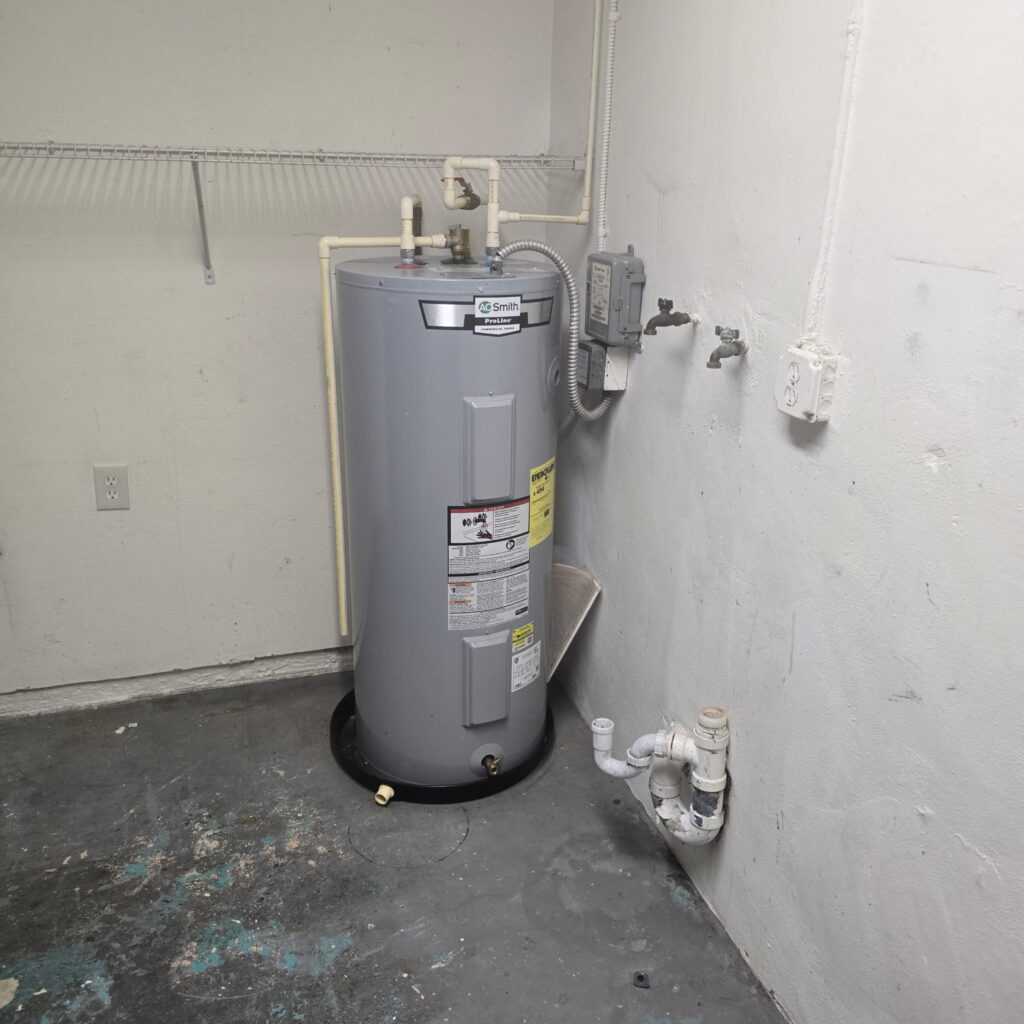
The traditional tank water heater is the familiar cylinder found in basements and utility closets across Pittsburgh. It works by storing a large volume of water, typically forty to fifty gallons or more, and keeping it heated and ready for use at all times. When you turn on a hot tap, heated water is drawn from the top of the tank while cold water flows in at the bottom to be warmed. The unit continually reheats the stored water to maintain its temperature, even when no one is using it.
This design is simple, proven, and relatively inexpensive to install, which is why tank water heaters remain the most common choice in American homes. The main drawbacks come from that constant reheating, which uses energy around the clock to keep water hot whether you need it or not, and from the finite size of the tank. Once you’ve used all the hot water it holds, you have to wait for the tank to refill and reheat, which is why a long shower can leave the next person in the cold.
How a Tankless Water Heater Works
A tankless water heater, sometimes called an on-demand water heater, takes a completely different approach. Instead of storing and constantly reheating a reservoir of water, it heats water only when you actually need it. When you open a hot tap, cold water flows through the unit and passes over a powerful heating element or gas burner that rapidly raises it to the desired temperature on the spot. When you turn the tap off, the unit stops heating.
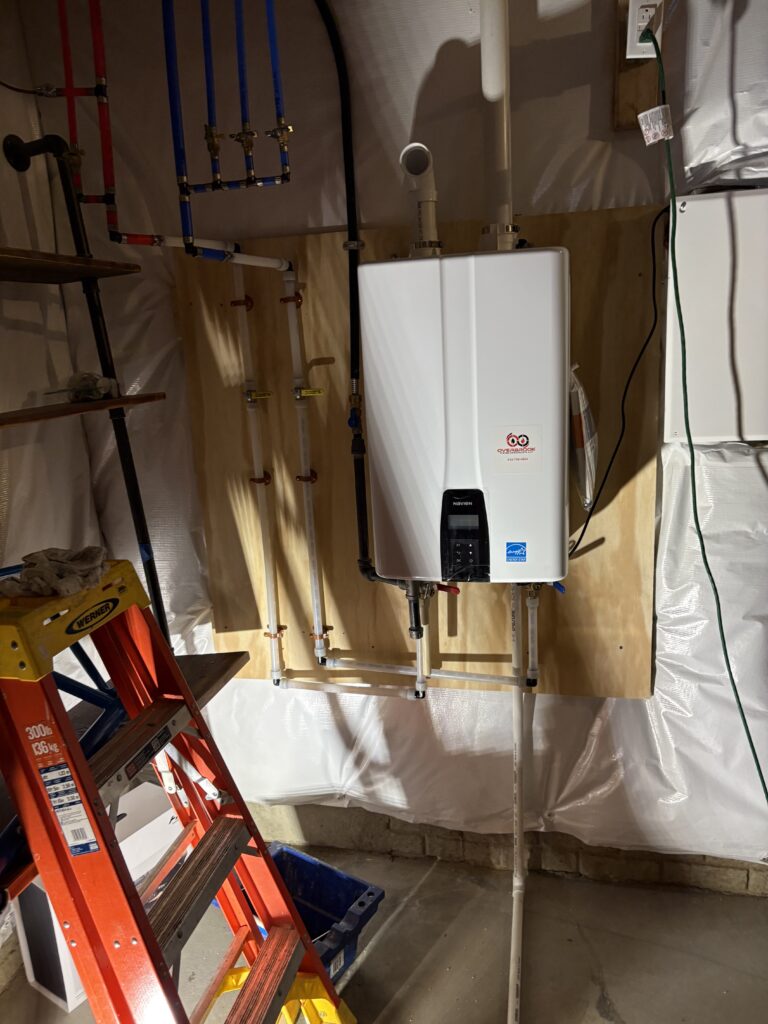
Because there’s no stored tank of water losing heat over time, tankless systems avoid the standby energy waste that comes with traditional units. They also provide what many homeowners value most: a continuous supply of hot water that doesn’t run out, since the unit heats water as long as you need it rather than drawing from a limited tank. These advantages come with their own trade-offs, however, which become clear when you compare the two systems across the factors that matter most.
Comparing Energy Efficiency
Energy efficiency is one of the biggest reasons homeowners consider going tankless. Because a tankless unit heats water only on demand, it eliminates the standby heat loss that a tank water heater experiences as it works to keep stored water hot all day and night. For many households, this translates into meaningful savings on monthly energy bills, and the difference tends to be most pronounced in homes that don’t use enormous amounts of hot water, where a traditional tank spends a lot of energy heating water that simply sits unused.
That said, the efficiency advantage varies with usage. Homes with very high hot water demand will still see benefits, but the gap may be smaller. It’s also worth noting that the energy savings accumulate over time, which matters when weighing them against the higher initial cost of a tankless system. Over the long lifespan of the unit, lower operating costs can offset much or all of that upfront difference, but the payback period depends on your household’s specific patterns.
Upfront and Long-Term Costs
Cost is often the deciding factor, and here the two systems differ significantly. Traditional tank water heaters are considerably cheaper to purchase and install, making them the more budget-friendly choice for the immediate expense. For homeowners who need a replacement quickly and want to keep upfront costs down, a tank unit is usually the most affordable path.
Tankless water heaters carry a higher price tag, both for the unit itself and for installation. The installation can be more involved, sometimes requiring upgrades to gas lines, electrical service, or venting to support the unit’s rapid heating demands, particularly in older Pittsburgh homes that weren’t built with tankless systems in mind. The long-term math is more favorable to tankless, however. Lower energy bills and a longer service life mean that over the full lifespan of the equipment, a tankless system can prove more economical despite costing more at the outset. The right choice depends on how long you plan to stay in your home and how much weight you give to immediate versus long-term costs.
Lifespan and Maintenance
When it comes to longevity, tankless water heaters generally have the edge. A traditional tank water heater typically lasts somewhere in the range of eight to twelve years, after which corrosion, sediment buildup, and wear eventually lead to failure or declining performance. A tankless unit, by contrast, can often last twenty years or more with proper care, which is a substantial difference when you consider that you might replace a tank heater twice in the time a single tankless unit serves you.
Both systems benefit from regular maintenance, and this is especially relevant in our area. Pittsburgh’s water can be on the harder side, and hard water leads to mineral scale buildup that affects both types of heaters. Tank units should be flushed periodically to remove sediment, while tankless units need descaling to keep mineral deposits from impairing the heating components. Staying on top of this maintenance is important for getting the full lifespan out of either system, and it’s a service a professional plumber can handle as part of routine care.
Space and Installation Considerations
Physical space is another practical difference. A traditional tank water heater is a large appliance that occupies a meaningful footprint in your basement, closet, or utility room. For homes where space is tight, that bulk can be a real drawback. Tankless units, on the other hand, are compact and mount on a wall, freeing up floor space and offering more flexibility in where they can be installed.
Installation complexity is where older Pittsburgh homes deserve special attention. Many of our area’s homes were built long before tankless technology existed, and retrofitting one can require additional work to accommodate its requirements, such as upgrading the gas supply line or adding the proper venting. A traditional tank replacement is often a more straightforward swap. None of this makes tankless impractical, but it does mean a professional assessment of your specific home is essential before deciding, so you understand exactly what the installation will involve.
Hot Water Supply and Winter Performance
How each system delivers hot water in daily life is a meaningful difference. A tankless unit provides a continuous, endless supply, which is ideal for households that run out of hot water with a tank system, but it does have a limit on how much hot water it can produce at one time. If multiple showers, the dishwasher, and the washing machine are all running simultaneously, a single tankless unit may struggle to keep up with the combined demand unless it’s properly sized for the household.
This is where Pittsburgh’s climate enters the picture. Our cold winters mean the groundwater entering your home can be quite cold, and the colder the incoming water, the harder a tankless unit must work to raise it to temperature, which can reduce its effective flow rate during the coldest months. This doesn’t rule out tankless by any means, but it makes correct sizing absolutely critical. A properly sized system, chosen with our local winter temperatures in mind, will perform well year-round, while an undersized one may disappoint. A traditional tank, meanwhile, delivers its full stored volume regardless of incoming water temperature, though it remains limited by tank capacity.
Which Water Heater Is Right for Your Pittsburgh Home?
There’s no universal answer, because the best choice genuinely depends on your priorities. A traditional tank water heater may be the better fit if you want the lowest upfront cost, need a straightforward replacement, or have a home where a tankless retrofit would be complicated and expensive. It’s a dependable, proven option that continues to serve millions of households well.
A tankless water heater tends to make the most sense if you value energy efficiency and lower long-term operating costs, want an endless supply of hot water, plan to stay in your home long enough to recoup the higher initial investment, or are short on space. For many Pittsburgh homeowners, the decision comes down to balancing immediate budget against long-term value, along with the practical realities of their particular home. The most reliable way to choose well is to have a knowledgeable plumber evaluate your home, your hot water needs, and your budget, then walk you through the options.
Choosing between a tankless and a traditional water heater is an important decision, and it’s one you shouldn’t have to make alone. Both systems can serve a Pittsburgh home well, but the right fit depends on the details of your house, your household’s hot water habits, and how you weigh upfront cost against long-term savings. An honest, professional assessment makes all the difference in getting it right.
At Overbrook Plumbing, we help homeowners throughout the Pittsburgh area compare their options, properly size their systems for our local climate, and install and maintain both tankless and traditional water heaters. Whether you’re replacing a failing unit, planning an upgrade, or simply weighing your choices, our experienced team is ready to provide clear, trustworthy guidance. Contact Overbrook Plumbing today to discuss the best water heater solution for your home and enjoy dependable hot water for years to come.